Short answer: The “real” Jane Austen was neither the demure spinster of legend nor the feisty heroine of the films. She was a sharp, private, professionally ambitious writer who published anonymously, observed her narrow world with merciless precision, and turned the limitations imposed on her into the very subject of her art. The gentle “Aunt Jane” we inherited is largely an invention — and knowing how, and why, that invention was built changes how you read every page.
The myth and the woman
For more than a century after her death, Austen’s family curated a sweet, harmless image: “dear Aunt Jane,” the contented maiden aunt who wrote charming stories between household duties. That phrase was not innocent. When her nephew James Edward Austen-Leigh published his Memoir of Jane Austen in 1870, the diminutive “dear Aunt Jane” did deliberate work — it miniaturized her, made her small and manageable and safely domestic, at exactly the moment her novels were circulating into a public world of commercial publishing and growing celebrity. The Memoir’s quiet, ideological project was to domesticate genius itself: to suggest that Austen wrote not out of intellectual restlessness or wounded ambition but out of family affection, almost by accident, hiding her manuscript whenever someone entered the room. It made the novels seem innocent. They are not.
What the letters reveal
The surviving letters tell a different story — and the gaps in them tell an even louder one. Austen’s sister Cassandra burned the most candid letters after Jane’s death, an act of protection that left a permanent absence at the center of the archive and, paradoxically, created the very silence the myth would later fill. What survives still startles. Here is a woman of biting wit and unsentimental clarity, who finds people “very stupid,” who delights in ridicule, who writes about money with anxious, constant attention because money was never far from her precarious situation. She accepted a marriage proposal from a man of decent fortune — Harris Bigg-Wither — and then, overnight, took it back, choosing uncertainty over a loveless security. The gentleness was a mask the family fitted over her after the fact; the fierce intelligence was the truth.
A professional, against the odds
Austen wrote in a society that did not expect women to be authors, and she navigated it with quiet determination. She published “By a Lady,” anonymously, negotiated with publishers, tracked her sales, and cared about her reviews — she was a working novelist, not a hobbyist scribbling trifles for the family circle. That she did this from a small orbit of provincial gentry, with no university, no travel, and no financial independence — dependent for her very survival on her brothers’ goodwill — makes the achievement more remarkable, not less. She understood her own constraints with bitter clarity, and she refused to let them silence her.
How a narrow life became a vast art
Austen famously worked on “two inches of ivory” — a handful of families in a country village. Critics have sometimes treated this as a limitation. It was a method. Denied the wide world handed to male writers, she went deep instead of broad and discovered that a drawing room contains the entire moral universe: ambition, cruelty, self-deception, love, and money, all in miniature and all the more visible for it. Her confinement became her microscope. And what she saw through it was not charming at all — it was a clear-eyed anatomy of how class, fortune, and gender combine to determine human possibility, and how marriage, for a woman, was less a romance than an economy on which her entire future depended.
Why the life illuminates the work
Knowing the real Austen changes how you read her. The irony sharpens; the stakes rise. Read Pride and Prejudice after the letters and Elizabeth’s refusals stop being charming spirit and become genuine risk; read Persuasion and Anne’s long regret reads like the reckoning of a writer facing her own roads not taken. Those marriage plots stop being whimsy and become what they always were — a clear-eyed woman’s report from inside a system that made marriage a woman’s only economy. Strip away “dear Aunt Jane” and you find a far more interesting and more formidable artist underneath: not serene, not safe, but watching everything, and missing nothing. Read her biography and you return to the novels hearing the steel beneath the wit.
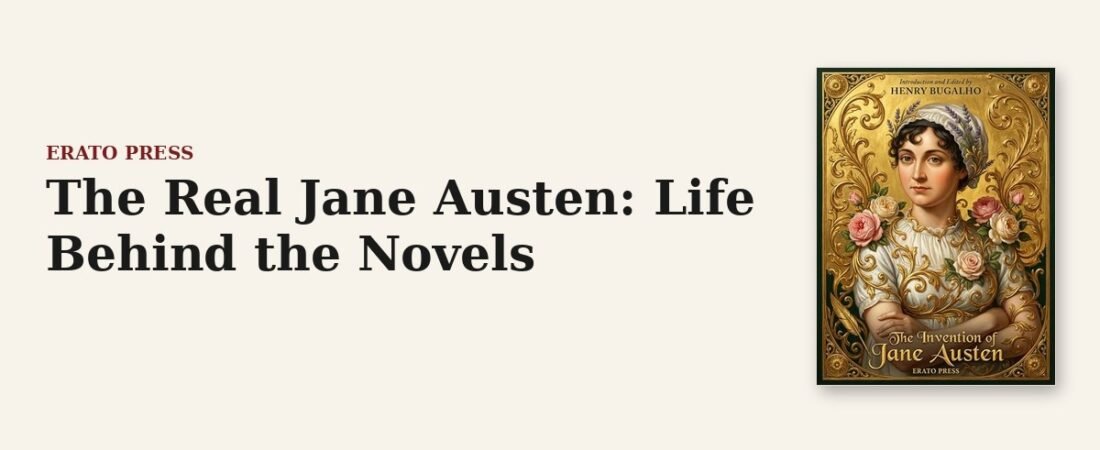
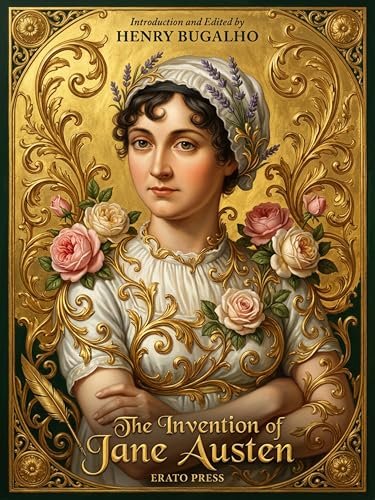
Read The Invention of Jane Austen →
Related reading: Where to Start With Jane Austen · Pride and Prejudice: Why It Still Works · Persuasion: Austen’s Quietest and Saddest Novel
This article contains affiliate links. As an Amazon Associate, Erato Press earns from qualifying purchases.
Enjoyed this piece?
Get the next one — our essays on the classics and news of each new Erato Press edition — straight to your inbox.