
Nathaniel Hawthorne believed the past does not stay buried — that the sins of one generation reach forward, cold and patient, to poison the next. In The Scarlet Letter he wrote that idea as a woman’s shame; in The House of the Seven Gables he wrote it as a house.
The gabled mansion was built on stolen ground — its founder sent an innocent man to hang for witchcraft to seize his land — and the curse the dying man laid on him (‘God will give you blood to drink’) has hung over the Pyncheon family and their dark old house for two centuries. Hawthorne fills it with the atmosphere of decay: the faded gentility, the miserly recluse, the portrait that will not come down, the ancestral guilt seeping through the walls like damp.
It is one of the first great American novels of the haunted inheritance — the recognition that a nation, too, is built on old crimes it would rather forget, and that the past has a way of collecting its debts. And yet Hawthorne, unusually, lets in the light at the end: the curse is finally broken not by vengeance but by love, when the young break free of the house that has held them.
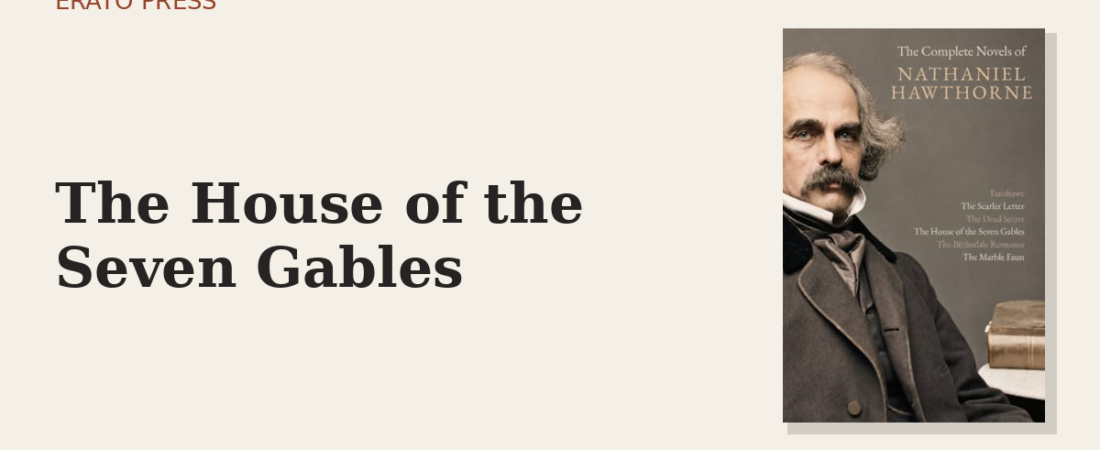
This edition gathers it among the complete novels of Hawthorne.
Read The Complete Novels of Nathaniel Hawthorne →
Enjoyed this piece?
Get the next one — our essays on the classics and news of each new Erato Press edition — straight to your inbox.