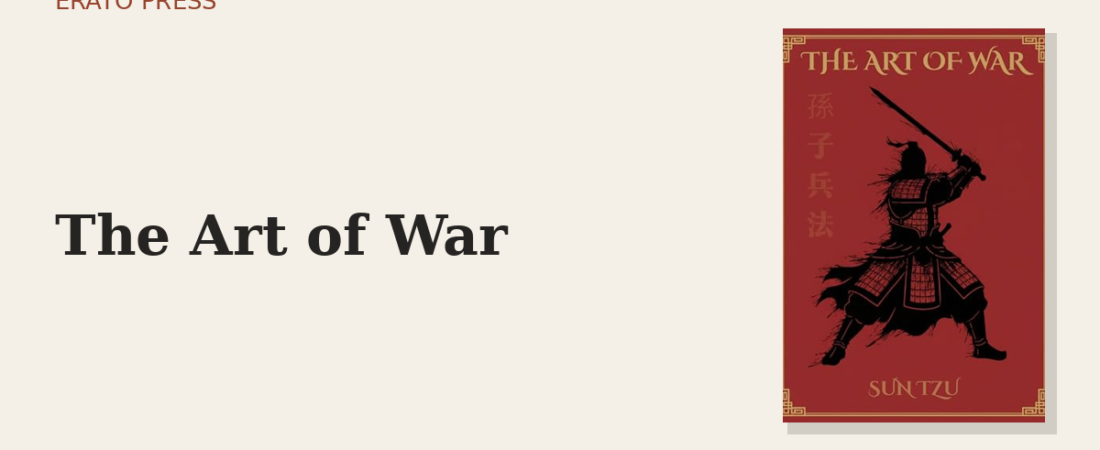

It is barely more than a pamphlet, it was written around 500 BC by a Chinese general, and it is quoted today in boardrooms, locker rooms, and law offices as often as any book on earth. Sun Tzu’s The Art of War has outlived every empire that used it, because its real subject is not war at all — it is strategy, and the mind of the person who wins.
Its most famous lessons are counterintuitive, and that is why they endure. The supreme excellence, Sun Tzu says, is not to win a hundred battles but to win without fighting — to defeat the enemy’s plans, not his army. Know yourself and know your opponent, and you need not fear the outcome. Appear weak when you are strong; the greatest victories are the ones no one has to bleed for. It is a philosophy of economy, patience, and self-knowledge dressed as a manual of combat.
That is why it long ago escaped the battlefield. Read it as The Prince‘s calmer, older cousin — a clear-eyed account of how power and conflict actually work, stripped of illusion. Twenty-five centuries on, no one has said it better or shorter.
This Erato Press edition presents the classic translation with the context to read it well.
Read The Art of War — the Erato Press edition →
Enjoyed this piece?
Get the next one — our essays on the classics and news of each new Erato Press edition — straight to your inbox.