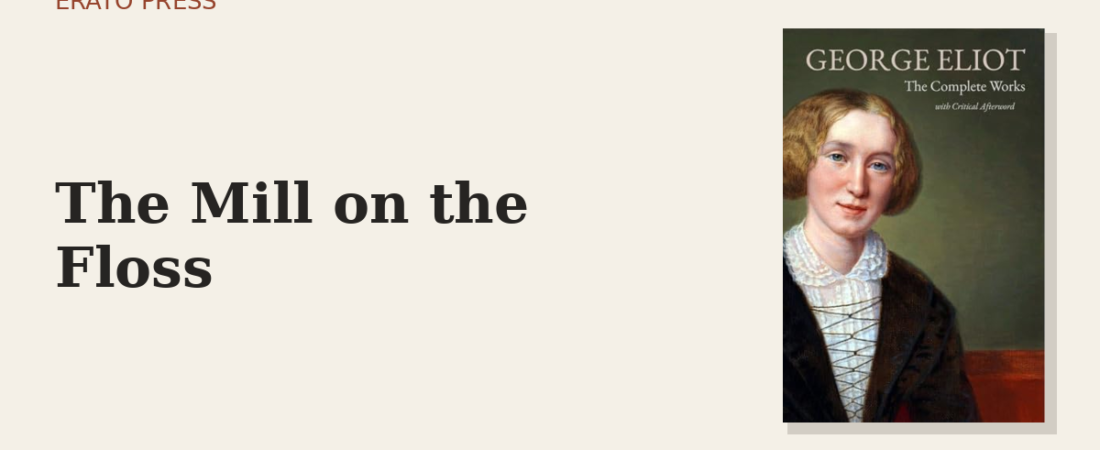

Before Middlemarch, George Eliot wrote the book closest to her own heart — The Mill on the Floss, the story of Maggie Tulliver, a clever, passionate, difficult girl in a world with no room for a clever, passionate, difficult girl.
Maggie is one of the great child-heroines in fiction, and Eliot draws her with the ache of self-portrait: too intelligent for the life her provincial family expects, too hungry for love and knowledge, forever in trouble for the crime of being more than a girl was permitted to be. Her fierce bond with her narrower brother Tom, who loves her and cannot forgive her, is the tragic engine of the book — two people who cannot live with or without each other.
The novel is Eliot’s most direct cry against the waste of women’s gifts, the small-mindedness of respectable society, and the cost of a woman wanting more than her portion. Its ending — sudden, controversial, overwhelming — has divided readers for a century and a half, but no one forgets it.
This edition gathers it in the complete works of George Eliot, beside Middlemarch and Silas Marner.
Read George Eliot: The Complete Works →
Enjoyed this piece?
Get the next one — our essays on the classics and news of each new Erato Press edition — straight to your inbox.