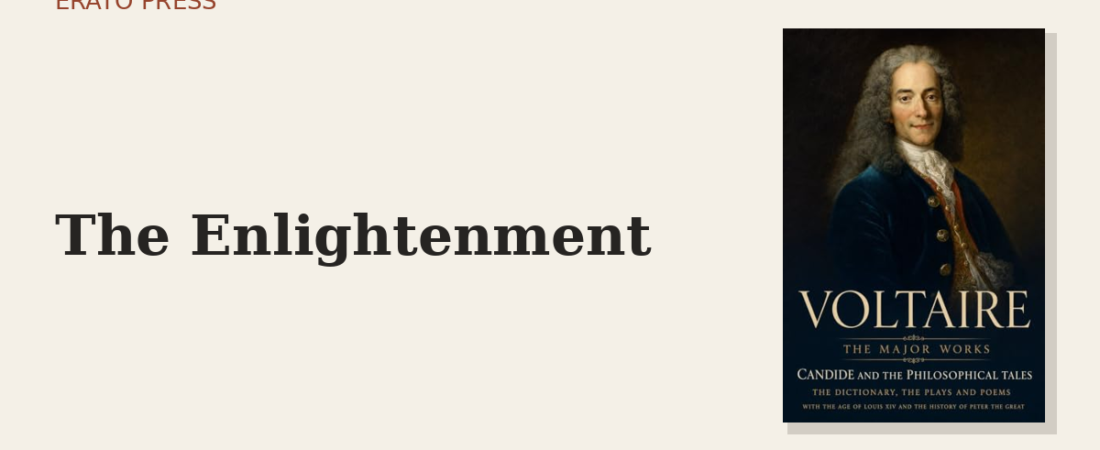

We live inside the Enlightenment — in a world its writers argued into being. The idea that reason should govern belief, that people have rights the powerful cannot take, that no authority is beyond question: none of it was obvious. It had to be written, wittily and dangerously, by a handful of men who risked prison and worse to say it. Erato Press now publishes three of the greatest.
Montaigne is the grandfather of the whole enterprise — the first modern skeptic, who turned doubt itself into a way of thinking and asked, of every certainty, Que sais-je? Voltaire made doubt into a weapon, mocking superstition and cruelty with a wit so sharp it is still funny, and demanding tolerance in an age of fanaticism. And Paine carried the ideas into the street and the revolution, proving that plain words could topple a throne.
To read them now, in an age that has rediscovered the pleasures of unreason, is not an antiquarian exercise. The Enlightenment is on trial again — its faith in reason, tolerance and universal rights attacked from every side. These three writers make the case for it better than anyone since, because they made it first, when it was most dangerous to do so.
Begin with Voltaire’s Candide, laugh, and then feel the argument underneath.
Read Voltaire: The Major Works →
Enjoyed this piece?
Get the next one — our essays on the classics and news of each new Erato Press edition — straight to your inbox.