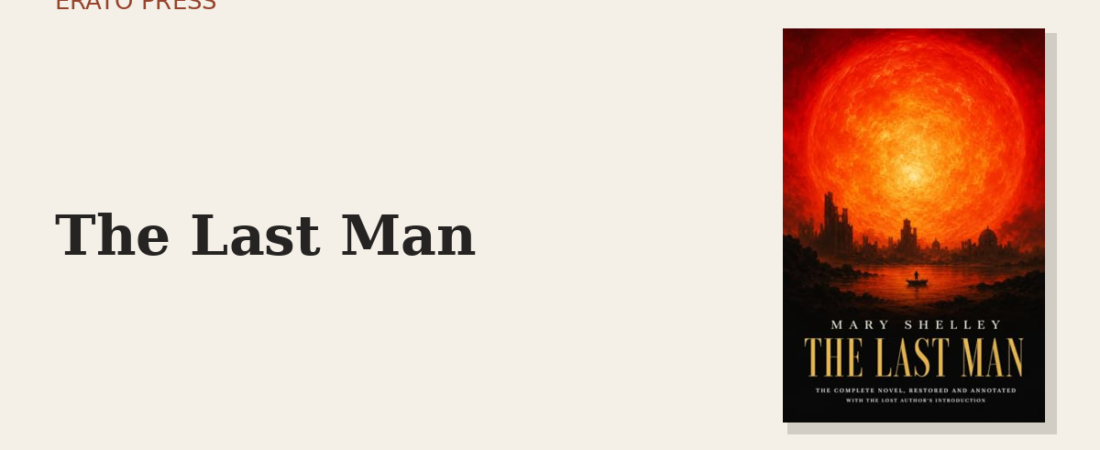

Everyone knows Mary Shelley invented science fiction with Frankenstein. Almost no one knows she did it a second time. In 1826, grieving the deaths of her husband and her children, she wrote The Last Man — a novel set at the end of the twenty-first century, in which a plague sweeps the earth and extinguishes humanity, leaving a single survivor to wander an empty world. It is the first modern apocalypse, and it was two centuries ahead of its time.
Readers of 1826 hated it. A story of humanity wiped out by a virus, with no divine rescue and no moral consolation, was too bleak and too strange, and the book vanished for a hundred and fifty years. It took the twentieth century — and its own fears of pandemic and extinction — to see what Shelley had done: written the ancestor of every last-survivor story, every plague novel, every quiet vision of the world after us.
Beneath the science fiction it is a book of grief. The plague is Shelley’s way of writing what she actually felt — that everyone she loved had been taken, and she had been left behind, the last one, in a world gone silent. That is why it still lands.
This edition restores the complete novel with the lost introduction — the forgotten apocalypse by the woman who invented the genre twice.
Read The Last Man — the Erato Press edition →
Enjoyed this piece?
Get the next one — our essays on the classics and news of each new Erato Press edition — straight to your inbox.