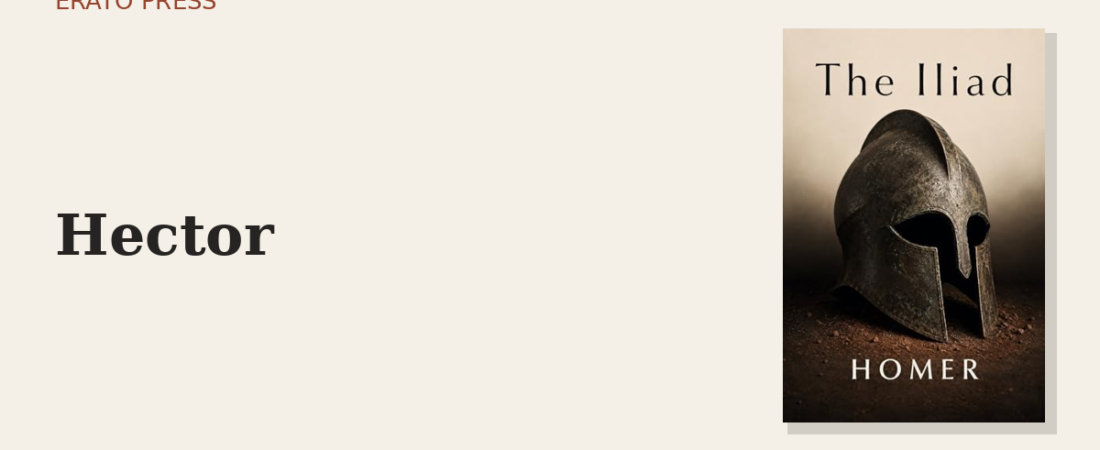

The Iliad is the poem of Achilles’ rage — we have read it as the first epic of war. But the character who breaks the reader’s heart is on the losing side. Hector, prince of Troy, is the better man in a poem that belongs, by right of glory, to his killer.
Achilles is the greater warrior — half a god, invulnerable, sulking in his tent because his honour was slighted while his comrades die. Hector fights for something else entirely: not glory but his city, his aged father, his wife Andromache, and the baby son who cries at the sight of his father’s plumed helmet. In the most tender scene in all of ancient poetry, Hector takes off the terrifying helmet, laughs, and holds his child — a soldier who knows he will die and goes out to the walls anyway, because someone must.
Homer’s astonishing fairness is that he makes us love the enemy. When Achilles finally kills Hector and drags his body in the dust, we do not cheer; we grieve. The poem ends not with the victor’s triumph but with the ransoming of Hector’s corpse, and an old king kissing the hands of the man who killed his son. War, Homer says, has no winners — only the dead, and those who must bury them.
See also the Iliad and the Odyssey compared.
Read The Iliad — the Erato Press edition →
Enjoyed this piece?
Get the next one — our essays on the classics and news of each new Erato Press edition — straight to your inbox.