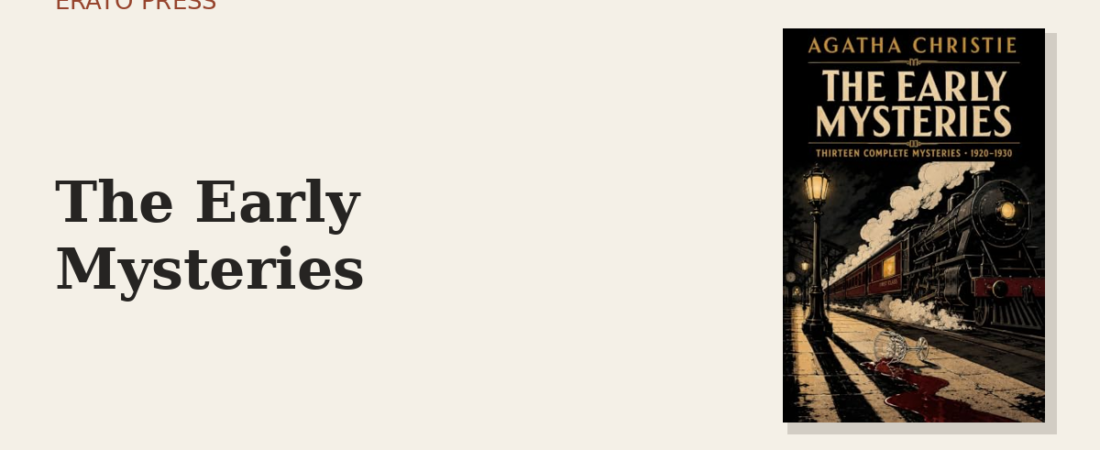

She is the best-selling novelist of all time — outsold only by Shakespeare and the Bible — and it all began with a wartime bet. Agatha Christie’s sister dared her she could not write a good detective story. The result, The Mysterious Affair at Styles, introduced a fussy little Belgian with an egg-shaped head and ‘the little grey cells,’ and the twentieth century had its detective.
This volume gathers Christie’s early work, the thirteen novels and collections of her first great decade, 1920–1930 — the years in which she quietly perfected the machine. Here is the young writer inventing the rules of the game and then, famously, breaking them: The Murder of Roger Ackroyd, which pulled a trick so audacious that readers still argue about whether it was fair play.
What the snobs miss about Christie is the craftsmanship. Beneath the tidy villages and country houses is an engineer of misdirection as precise as any modernist — every clue in plain sight, every reader flattered and fooled. She understood, better than almost anyone, that the pleasure of a mystery is the pleasure of being outwitted by a fair opponent.
Read her beside the hard-boiled tradition she is so often set against. This is where the cosy mystery became an art.
Read The Early Mysteries — the Erato Press edition →
Enjoyed this piece?
Get the next one — our essays on the classics and news of each new Erato Press edition — straight to your inbox.