Short answer: Start with The Count of Monte Cristo for Dumas at his deepest, or The Three Musketeers for Dumas at his most joyful. Read either and you’ll understand why the century that filed him under “merely popular” was making one of criticism’s great mistakes.
The snob’s mistake
For a hundred years Dumas was filed under “entertainment” — a writer for boys, for railway journeys, for the long afternoons of convalescence. The universities ignored him. The verdict was exactly backwards. What Dumas understood, and what his century’s literary establishment largely did not, is that the pleasures of narrative — suspense, comedy, adventure, the deep satisfaction of watching competence exercised — are not inferior pleasures. They are the oldest pleasures fiction offers. Where Balzac begins with sociology and Flaubert with style, Dumas begins with momentum and never wastes a step; and that momentum, married to genuine psychological insight and real historical seriousness, does not produce mere amusement. It produces books people are still reading, and loving, two centuries on, while many “serious” novels of the same decade have turned to dust.
The unlikely life behind the books
It helps to know who Dumas was. Born in 1802, the grandson of an enslaved woman in Saint-Domingue and the son of one of Napoleon’s most brilliant generals, he was raised in genteel poverty after the emperor refused his widowed mother a pension. He arrived in Paris in 1822 with little but a beautiful handwriting — which got him a copy-clerk’s job — and in 1829 a single play made him, overnight, the most famous young dramatist in France. Then he discovered the feuilleton: novels serialized in the daily papers, paid by the line, holding readers by the throat from one instalment to the next. He never looked back, producing more than 250 titles, often with collaborators — most importantly Auguste Maquet, who supplied research and rough drafts for the books that made Dumas immortal.
Start here: The Count of Monte Cristo
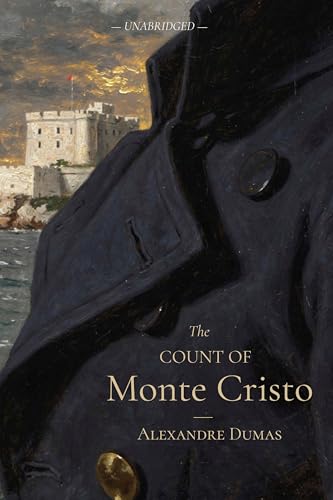
If you read one Dumas, read this. On the surface it’s the perfect revenge machine: a young sailor framed, buried alive in a sea fortress, escaping, returning masked and rich to dismantle his enemies. Underneath, it’s a stranger and more self-aware book than its reputation allows — a novel about substitution, in which the half-literate boy who goes into the dungeon and the polished count who comes out may not, in any deep sense, be the same person at all. The Count tells Mercédès that Edmond Dantès died the day he was thrown into the sea, and the novel half-believes him. It earns every one of its 1,200 pages. Read it unabridged, and meet its hero properly in Edmond Dantès: Literature’s Greatest Revenge.
Read the Erato Press unabridged Count of Monte Cristo →
Or start here: The Three Musketeers
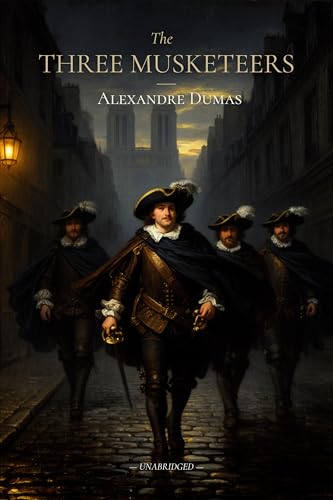
Prefer joy to depth on the first date? Begin with d’Artagnan. The Three Musketeers has one of the most assured openings in popular fiction — a young Gascon on a ridiculous yellow horse rides into Meung, collects an insult and three duels inside the same hour, and you have already surrendered. It is comedy that contains, like a sword in a scabbard, everything a hero needs to be; and it opens onto a saga that grows, across thirty fictional years, from comedy to elegy. The whole arc is mapped in our reading-order guide to the d’Artagnan Romances.
Read the Erato Press Three Musketeers →
Where Dumas leads
His line of influence runs through almost everything that matters in the modern novel of incident. Robert Louis Stevenson learned pace from him; Arthur Conan Doyle learned the art of the irresistible instalment from him; and every thriller writer since is, in some sense, his grandchild. Once Monte Cristo or the Musketeers has you, the complete d’Artagnan Romances — ending with the famous Man in the Iron Mask — is the natural next journey. And if you find yourself wanting all of it at once, Alexandre Dumas: The Complete Novels gathers the Musketeers, Monte Cristo, and the Valois romances in a single annotated volume.
Get the complete d’Artagnan Romances →
Related reading: The Count of Monte Cristo Isn’t Who You Think · Edmond Dantès: Literature’s Greatest Revenge · Dumas and the Ghostwriter Question
This article contains affiliate links; as an Amazon Associate, Erato Press earns from qualifying purchases.
Enjoyed this piece?
Get the next one — our essays on the classics and news of each new Erato Press edition — straight to your inbox.