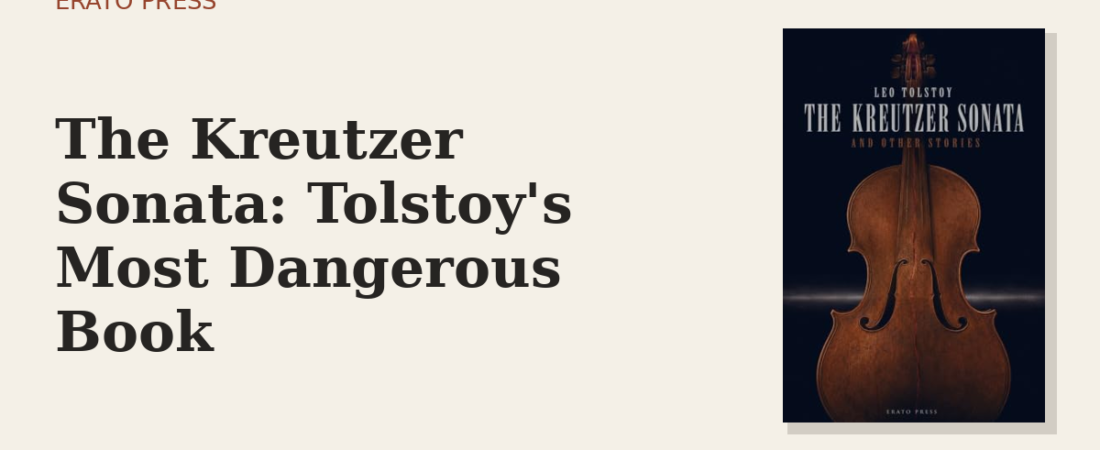

A man confesses, to a stranger on a train, that he murdered his wife in a fit of sexual jealousy — and then spends the rest of the novella arguing that the real crime was marriage itself, that physical desire between husband and wife is a degradation, and that Beethoven’s Kreutzer Sonata, which he once watched his wife play with another man, is dangerous precisely because music can provoke feelings words can’t control.
Tolstoy wrote it during the same crisis of conscience that made him renounce his own earlier novels, and Russian censors banned it outright; Tolstoy’s own wife, who had to live with a husband publicly arguing that marital sex was a kind of violence, wrote a furious rebuttal novella of her own that went unpublished for a century.
It’s the most extreme document of the same late-life reckoning that produced The Death of Ivan Ilyich — Tolstoy turning his artistic gifts against almost everything, including marriage, that his own earlier novels had once made beautiful.
Read The Kreutzer Sonata and Other Stories →
Enjoyed this piece?
Get the next one — our essays on the classics and news of each new Erato Press edition — straight to your inbox.