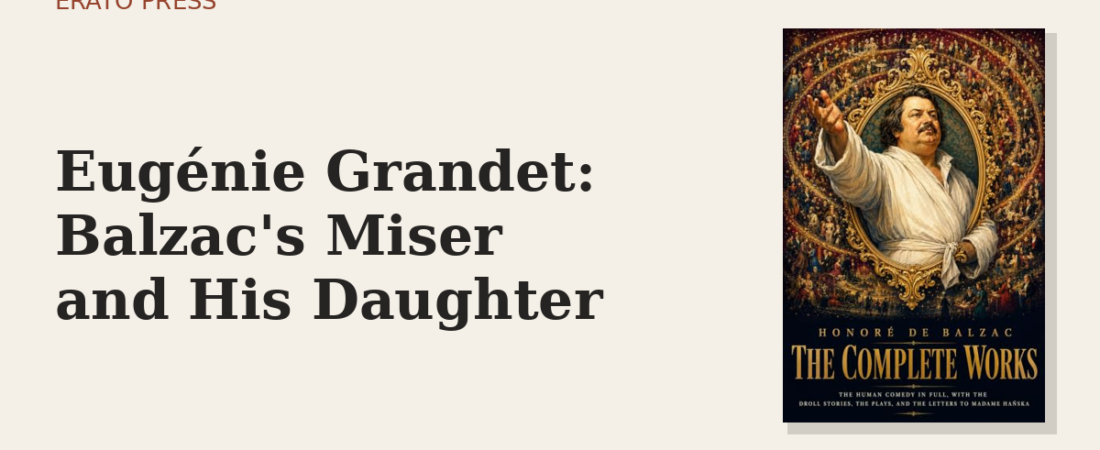

Old Grandet is one of the great misers of literature, richer than anyone in his provincial town suspects and incapable of spending a franc he doesn’t have to — but Balzac’s real subject is his daughter Eugénie, who inherits both his fortune and, more quietly, his capacity for a single fixed devotion, redirected from gold to a worthless cousin who barely deserves it.
The novel’s cruelty is patient rather than dramatic: no single terrible act, just decades of a woman’s life slowly narrowing around a promise nobody asked her to keep, in a house that grows colder and emptier as the money in its cellar grows larger. Balzac shows exactly how a fortune can imprison a family more completely than poverty ever could.
It’s one small thread in the Human Comedy, and one of the clearest arguments for why Balzac’s minor characters so often outlast his famous ones.
Read The Complete Works of Honoré de Balzac →
Enjoyed this piece?
Get the next one — our essays on the classics and news of each new Erato Press edition — straight to your inbox.