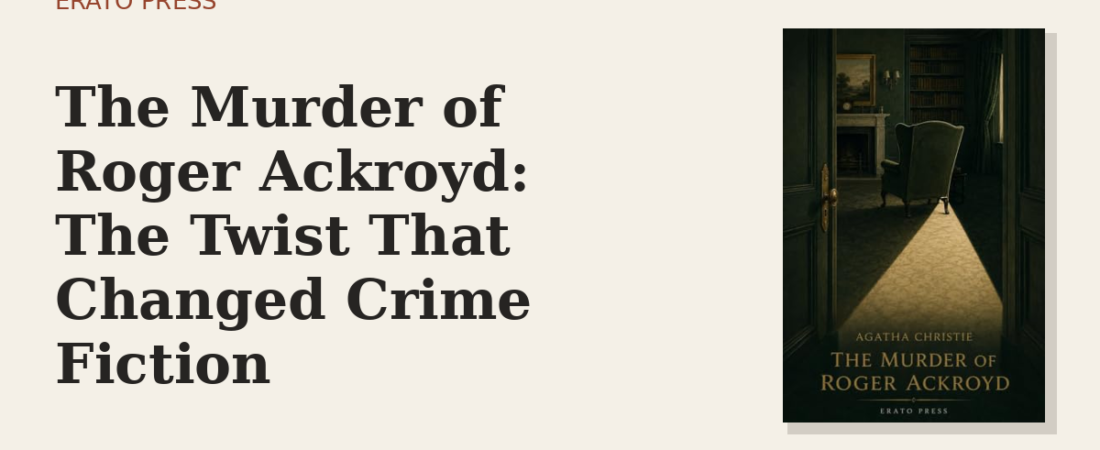

When Agatha Christie published The Murder of Roger Ackroyd in 1926, some critics accused her of cheating. The novel is narrated by Dr. Sheppard, a seemingly trustworthy village physician who assists Poirot’s investigation from the first page — and the entire mystery genre’s unwritten contract with the reader had, until then, assumed the narrator wasn’t the one lying.
It wasn’t cheating; it was a rule nobody had thought to write down until Christie exposed it by breaking it cleanly, fairly, with every clue visible in plain sight to a reader sharp enough to notice what the narration was carefully not saying. The Detection Club later debated whether it should even be allowed. It became one of the most influential structural tricks in the genre’s history.
It’s the technical inverse of Christie’s earliest mysteries, which played fair in more conventional ways — proof that by 1926 she had already outgrown the rules she’d started out mastering.
Read The Murder of Roger Ackroyd →
Enjoyed this piece?
Get the next one — our essays on the classics and news of each new Erato Press edition — straight to your inbox.