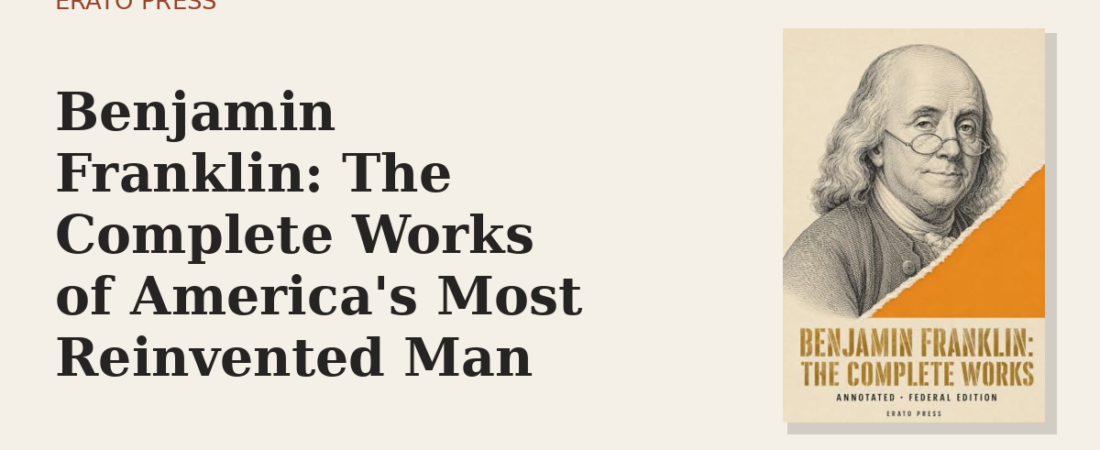

Franklin’s Autobiography is one of the most carefully constructed self-portraits in American letters — a runaway printer’s apprentice turning himself, chapter by chapter, into a scientist, diplomat, and sage, complete with a famous chart of thirteen virtues he tracked his own daily failures against. It’s charming, funny, and, historians generally agree, considerably more flattering than the record.
This edition reunites that autobiography, long fragmented across drafts Franklin never finished polishing, with the twelve-volume Federal Edition of his letters and papers — the version of Franklin who negotiated with the French court, argued electrical theory with the Royal Society, and, in his last years, petitioned Congress to abolish slavery, a document conspicuously absent from the folksy version taught in most schools.
Set beside Washington’s anxious formality, Franklin’s prose is a revelation: a founder who understood, better than almost anyone, that his own image was itself a kind of invention worth patenting.
Read Benjamin Franklin: The Complete Works →
Enjoyed this piece?
Get the next one — our essays on the classics and news of each new Erato Press edition — straight to your inbox.