
Creon issues an edict: the traitor’s body stays unburied, food for dogs and birds, as a lesson to the city. Antigone buries her brother anyway, knowing it means her own execution, because she believes an unwritten, older law — the duty owed to the dead — outranks any decree a living king can pass. Sophocles builds the whole play out of that single, unresolved collision.
What makes Antigone endure past its Athenian occasion is that Sophocles refuses to let either side simply win the argument. Creon is not a cartoon tyrant; he has a real civic case, about order and precedent, that later disintegrates only because he cannot stop doubling down once challenged. Antigone is not a simple martyr; her devotion to her brother is tangled with a pride as absolute as Creon’s own.
Alongside the House of Atreus plays, it’s the clearest surviving example of what Greek tragedy did that almost nothing since has matched: staging a real argument, with no side let entirely off the hook.
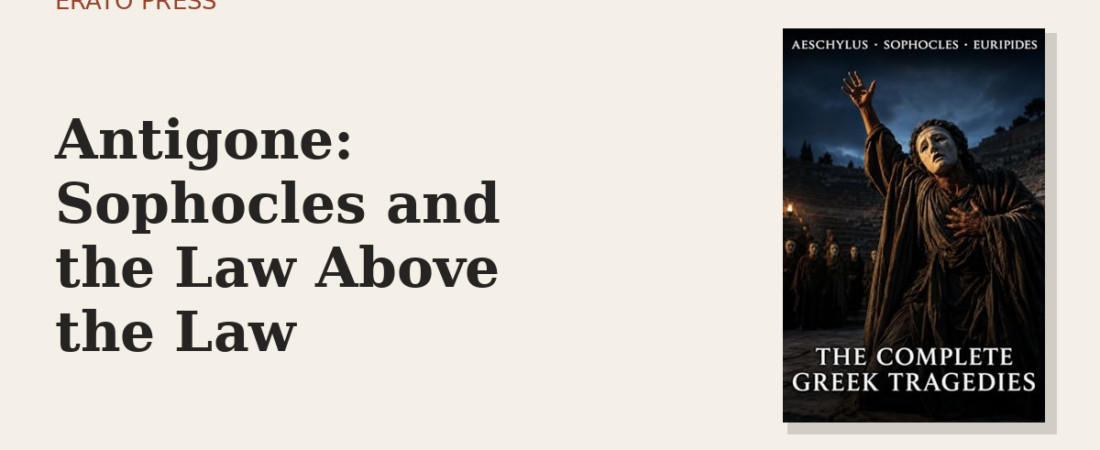
Read The Complete Greek Tragedies →
Enjoyed this piece?
Get the next one — our essays on the classics and news of each new Erato Press edition — straight to your inbox.