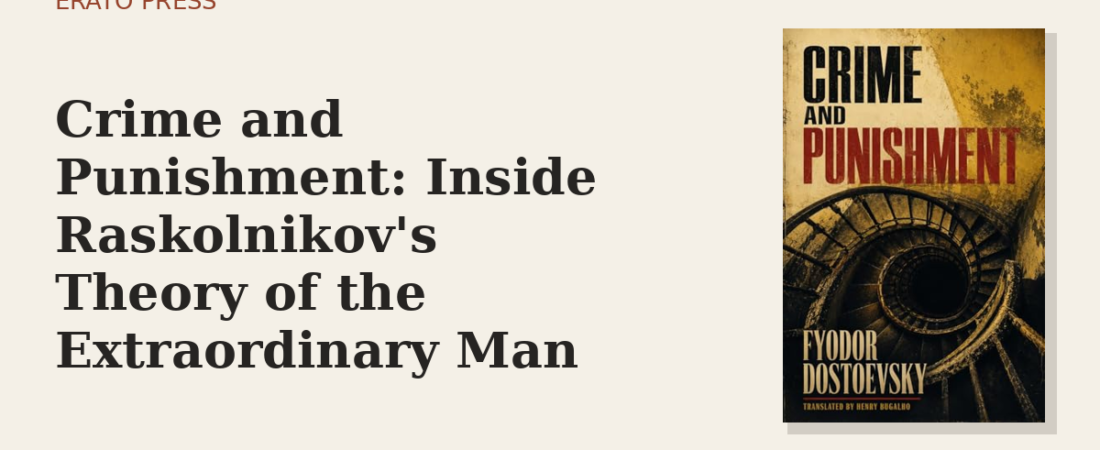

Before he murders the pawnbroker, Raskolnikov writes an essay. It argues that history’s great men — Napoleon chief among them — are permitted to break moral law if breaking it serves a higher purpose, and that a truly extraordinary man has both the right and the duty to step over ordinary conscience. Then he tests the theory on an old woman with an axe, to see if he is one of the extraordinary ones.
He isn’t, and Crime and Punishment is 500 pages of him discovering it — not through police work, which barely matters, but through his own body and mind rebelling against what he’s done. Dostoevsky invented the modern psychological thriller by refusing to write one: there’s no mystery about who did it, only the much harder mystery of what a conscience does when it can’t stop existing.
It’s the same interrogation Dostoevsky runs, from other angles, in The Brothers Karamazov and in the shorter, stranger The Death of Ivan Ilyich — the question of what a person owes to being merely, ordinarily human.
Enjoyed this piece?
Get the next one — our essays on the classics and news of each new Erato Press edition — straight to your inbox.