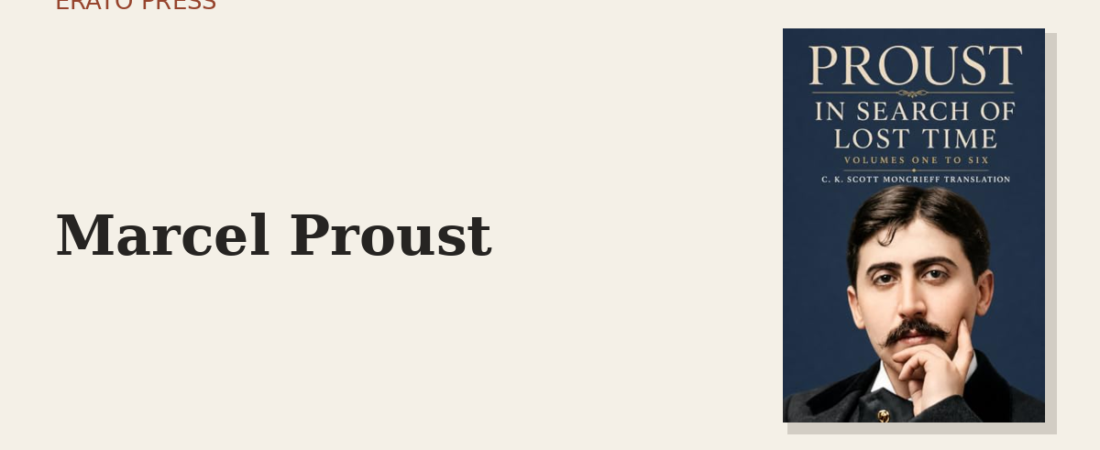

It is the longest great novel ever written, and the one most people are frightened of. But In Search of Lost Time is not difficult in the way people fear — there are no tricks, no puzzles. It is simply slow, deliberately, gloriously slow, and learning to read it is learning to read at the speed of consciousness itself.
Everyone knows the madeleine — the little cake dipped in tea that, in the first volume, suddenly floods the narrator with a childhood he thought was lost forever. That moment is the key to the whole enormous book. Proust’s subject is memory: how the past is not gone but stored, sunk, waiting to be released by a taste, a smell, an uneven paving stone — and how, in those flashes of involuntary memory, we briefly escape time and touch our own lives whole. The three thousand pages are the working-out of that one astonishing idea.
How to read it? Slowly, and without guilt. Do not race. Read a few pages a night; let the enormous sentences unfurl; do not worry about ‘plot.’ Proust is teaching you to notice — a face, a feeling, the exact shade of jealousy or snobbery or longing — with a precision no other novelist has matched. Give it time and it gives you back your own capacity to feel.
This edition presents six of the seven volumes in the classic Scott Moncrieff translation. It is the reading of a lifetime — begin it.
Enjoyed this piece?
Get the next one — our essays on the classics and news of each new Erato Press edition — straight to your inbox.