
Balzac mapped a society; Émile Zola dissected one. Across twenty novels — the vast Rougon-Macquart cycle, following one family through the Second Empire — Zola set out to do for fiction what the new sciences were doing for the body: to observe human beings without flinching, as products of blood, environment, and appetite.
The result was Naturalism, and it scandalised France. Zola took the novel into places it had never gone: the coal mines of Germinal, where starving workers rise and are crushed; the slums and gin-shops of L’Assommoir; the department store, the stock exchange, the battlefield, the brothel. His characters are driven by hungers they cannot master, and he refused to look away from any of it — the sweat, the sex, the violence, the machinery grinding the poor. Respectable readers were horrified; younger writers were set free.
And Zola was more than a clinician. When it mattered, he risked everything for justice — his open letter J’Accuse, defending an innocent man against the French state, is the model of the writer as public conscience. Germinal, his masterpiece, ends not in despair but in the underground stirring of a better world to come.
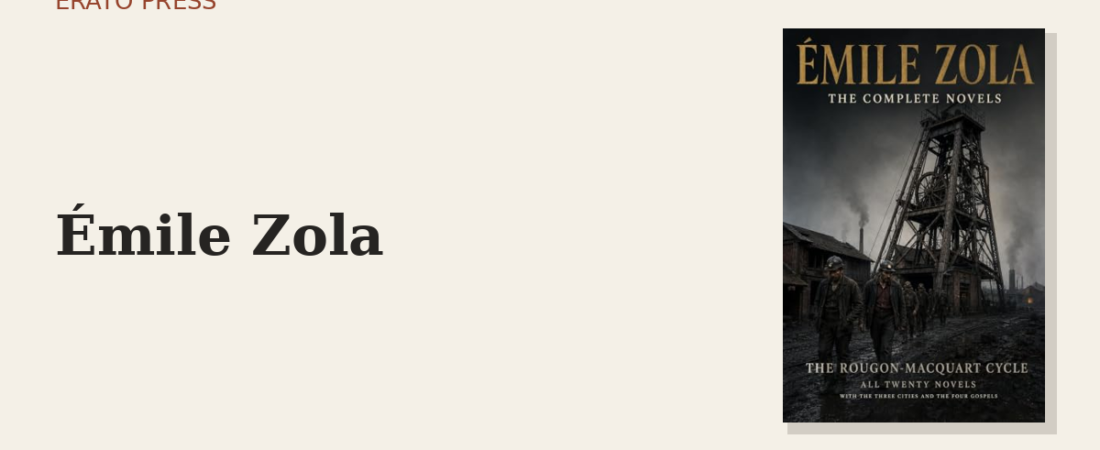
This edition gathers the complete cycle — all twenty novels — with the Three Cities and the Four Gospels, and Thérèse Raquin. It is one of the monuments of the European novel.
Read it beside Balzac’s Human Comedy, the world Zola inherited and pushed to its limit.
Read Émile Zola: The Complete Novels →
Enjoyed this piece?
Get the next one — our essays on the classics and news of each new Erato Press edition — straight to your inbox.