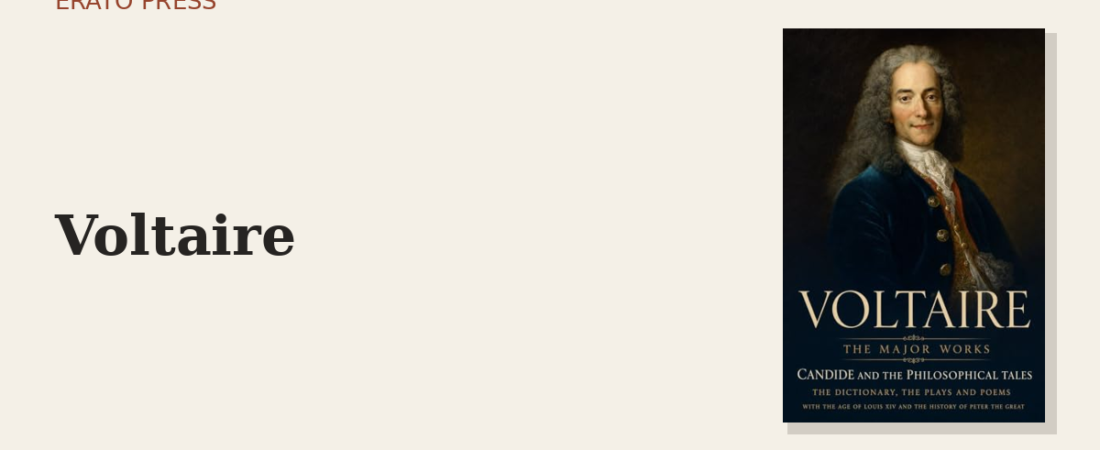

It is barely a hundred pages, it was written in three days, and it is one of the funniest and most devastating books ever composed. Candide is Voltaire’s demolition of easy optimism — a young man taught that this is ‘the best of all possible worlds,’ sent out to have that lesson beaten, burned, shipwrecked, and flogged out of him across three continents.
Voltaire wrote it in fury, after a real earthquake killed tens of thousands in Lisbon and the philosophers still insisted all was for the best. His answer was to pile every horror of the age — war, plague, slavery, the Inquisition — onto poor Candide and his ridiculous tutor Pangloss, who keeps explaining, through torture and disaster, that everything happens for a reason. The satire is merciless and the laughter is real, which is exactly what makes it sting.
And the ending is one of the wisest in literature. Having seen the worst of the world, Candide gives up trying to explain it and settles for something smaller and truer: il faut cultiver notre jardin — we must cultivate our garden. Stop justifying the universe; tend the plot in front of you; do the work you can. It is the quiet, adult reply to a world that refuses to make sense.
This edition collects Candide with the philosophical tales, the Philosophical Dictionary, and Voltaire’s plays and histories — the full arsenal of the Enlightenment’s sharpest wit.
Read Voltaire: The Major Works →
Enjoyed this piece?
Get the next one — our essays on the classics and news of each new Erato Press edition — straight to your inbox.