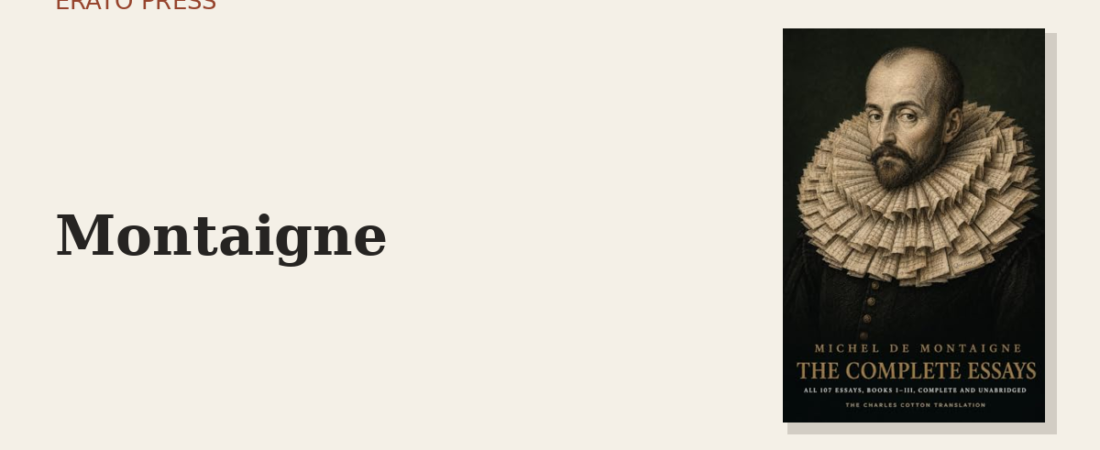

In 1571, a French nobleman retired to a tower on his estate, lined the walls with books, and began to write about the only subject he felt he truly knew: himself. He called the pieces essais — ‘attempts,’ ‘tries’ — and in doing so invented a form that did not exist before him and has never stopped being useful since. Every personal essay, every column, every blog post, descends from Michel de Montaigne.
What makes him feel like a friend across four and a half centuries is his honesty. He writes about fear, friendship, sleep, sadness, thumbs, cannibals, the education of children, and his own approaching death, and he never pretends to certainty. His motto was a question — Que sais-je?, ‘What do I know?’ — and his method was to think on the page, contradict himself, wander, and follow his mind wherever it went. He is the first writer in the modern world to treat his own ordinary experience as worth examining, and to admit, cheerfully, how little any of us can be sure of.
Shakespeare read him; so did every essayist who followed. To read Montaigne now is to discover that a man dead since 1592 understood your own inner weather better than most of the living.
This edition gathers all 107 essays, complete and unabridged, in the classic Charles Cotton translation. It is the perfect bedside book — open anywhere, read a page, meet a friend.
Read The Complete Essays of Montaigne →
Enjoyed this piece?
Get the next one — our essays on the classics and news of each new Erato Press edition — straight to your inbox.