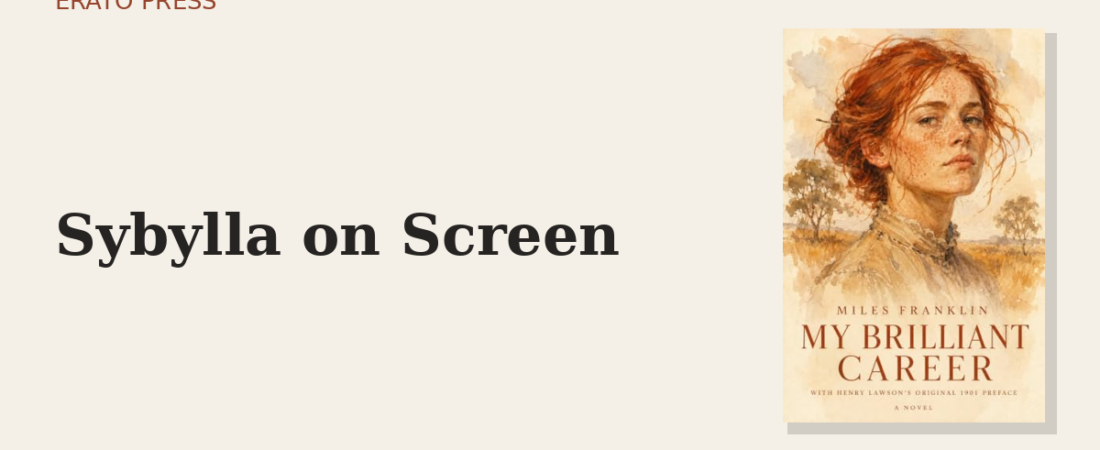

The Netflix series is not the first time the screen has fallen for Sybylla Melvyn. In 1979 the young Australian director Gillian Armstrong made My Brilliant Career into a landmark film — one of the works that announced the Australian New Wave to the world — and made a star of Judy Davis, whose flame-haired, furious Sybylla became, for a generation, the face of the novel.
Set the two adaptations side by side and you can read the changing idea of what a woman’s freedom means. Armstrong’s 1979 film, made in the wake of second-wave feminism, is spare, wind-blown, and defiant — Sybylla’s refusal of marriage feels like a manifesto. The 2026 series, critics say, is warmer and wittier, a buoyant coming-of-age comedy that lets Sybylla be joyful as well as fierce. Neither is wrong. Each age simply finds in the same girl the heroine it needs.
That is the nature of adaptation, as we have argued about Nolan’s Odyssey and the quarrel over what a faithful adaptation even is. A film or a series is never the book; it is a reading of the book, shaped by its moment, and a good one sends you back to the source to see what it left out. Judy Davis and Philippa Northeast are two answers to the same question — but the question was posed, once and for all, by a teenager with a pen in 1901.
Watch them both. Then read the original — the Sybylla no camera can quite catch — in the Erato Press edition, with Henry Lawson’s preface and the story of the book Franklin tried to bury.
Read My Brilliant Career — the Erato Press edition →
Enjoyed this piece?
Get the next one — our essays on the classics and news of each new Erato Press edition — straight to your inbox.