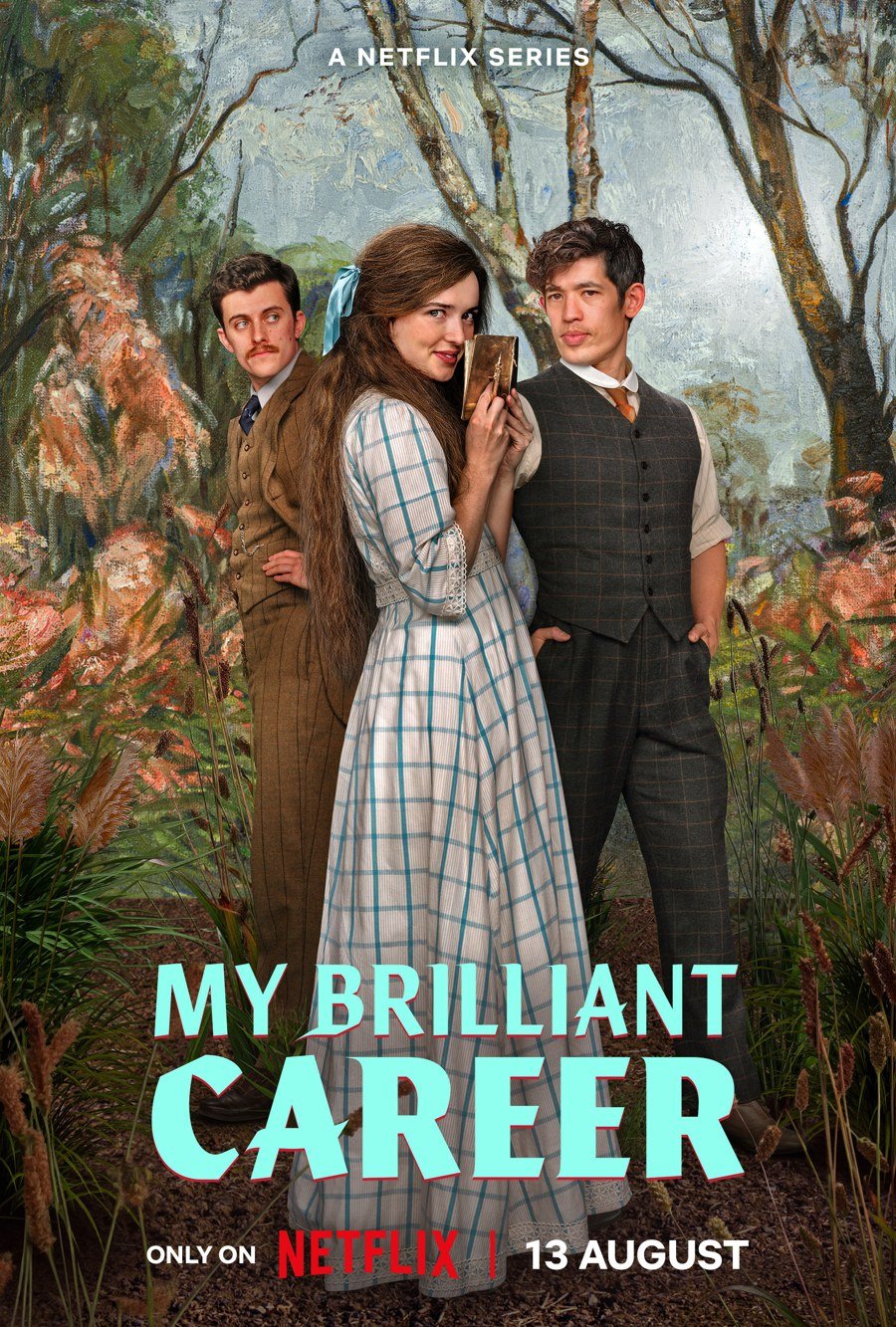
There is a new series taking over Netflix this week, and for once the hype is earned. My Brilliant Career — six episodes, released on 13 August — has done something almost unheard of: it opened with a 100% score on Rotten Tomatoes, critics lining up to call it witty, charming, and unexpectedly moving. If you have not started it, start it.
The series follows Sybylla Melvyn, a fierce, funny, book-mad girl growing up poor on a drought-stricken farm in turn-of-the-century Australia, who wants the one thing the world will not easily grant her: a life of her own, and a career as a writer. Philippa Northeast, in the lead, is the reason to watch — reviewers have singled out her dazzling, defiant performance as the heart of the show, and more than one critic has called this the period romance that quietly outshines Bridgerton.
But here is what the reviews mostly bury, and what we cannot resist telling you: the book behind it is one of the great classics of world literature — and Erato Press publishes it.

My Brilliant Career was written in 1901 by Miles Franklin, and the most astonishing fact about it is that she wrote it as a teenager, on a remote farm, in the unmistakable voice of a girl who refuses to be told what a woman’s life is for. It was an instant sensation, championed by the great bush poet Henry Lawson — and then its author, mortified that readers assumed Sybylla was simply her, suppressed the book for forty years.
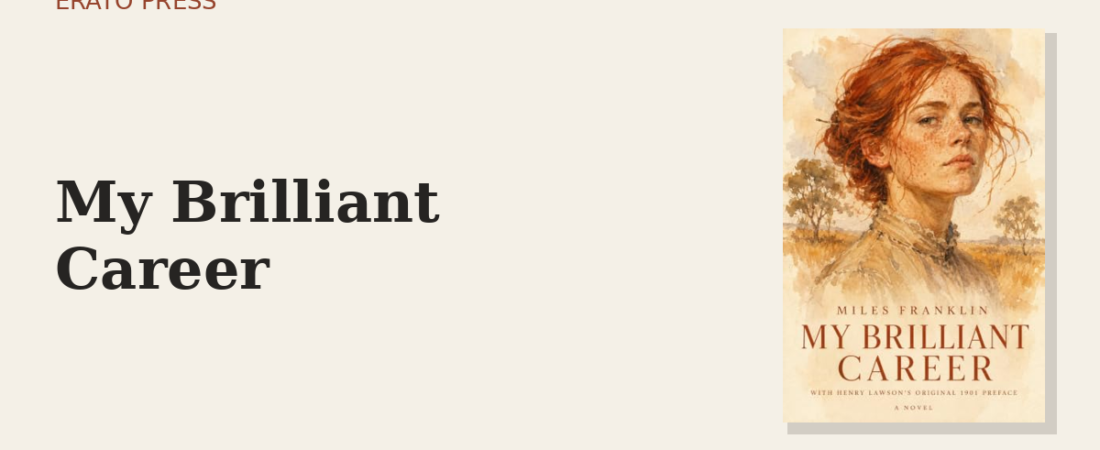
The Erato Press edition restores the complete novel with Lawson’s original 1901 preface and a critical afterword on the strange story of the book she banned. Watch the series this week — and then meet the real Sybylla on the page, in the words of the girl who invented her.
Read My Brilliant Career — the Erato Press edition →
Over the coming days we will tell the whole story: the teenager who wrote it, the forty-year suppression, the heroine who said no, and how each generation — from the classic 1979 film to this new series — has read her differently. Because, as we argued about adaptation and Nolan’s Odyssey, the screen is only ever an invitation back to the book.
Enjoyed this piece?
Get the next one — our essays on the classics and news of each new Erato Press edition — straight to your inbox.