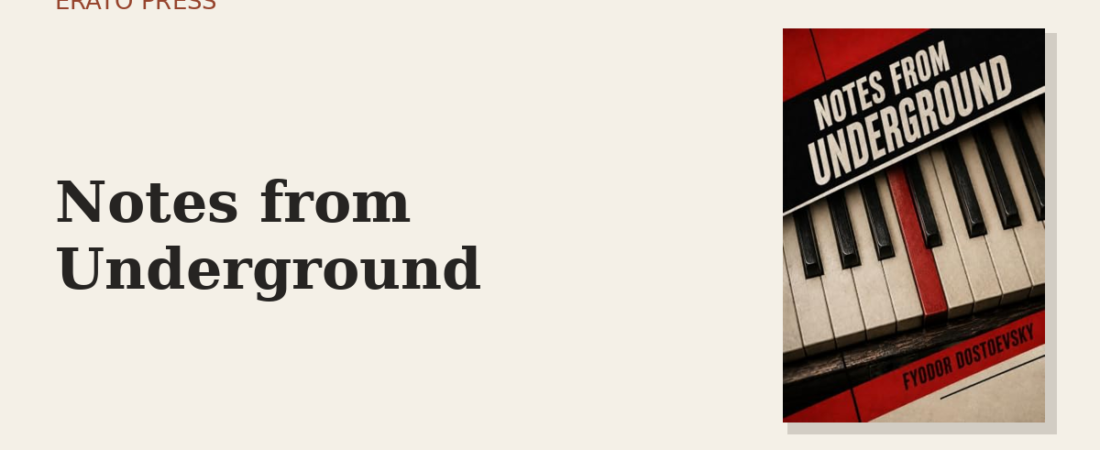

‘I am a sick man. I am a spiteful man.’ With those words Dostoevsky opens the strangest hundred pages he ever wrote — Notes from Underground, the furious monologue of a nameless clerk in a cellar, and, many argue, the first truly modern work of literature.
We have called it the first voice of the modern self. Return to it for its most disturbing idea. The Underground Man is confronted with the confident nineteenth-century faith that, once we understand our true interests, we will rationally act on them and build a perfect society — a ‘crystal palace’ of reason. And he spits on it. Human beings, he insists, will choose suffering, chaos, and self-destruction for one reason above all others: to prove they are free, that they are not the keys of a piano, not cogs in someone else’s rational machine.
It is a terrifying insight, and the whole twentieth century would prove it true. We do not always want what is good for us. We want, more than comfort, more than reason, to be the authors of our own choices — even ruinous ones. The spite of the Underground Man is the last, sick assertion of a freedom that has nothing left to spend itself on but refusal.
It is where existentialism begins. Read it with Crime and Punishment.
Read Notes from Underground — the Erato Press edition →
Enjoyed this piece?
Get the next one — our essays on the classics and news of each new Erato Press edition — straight to your inbox.