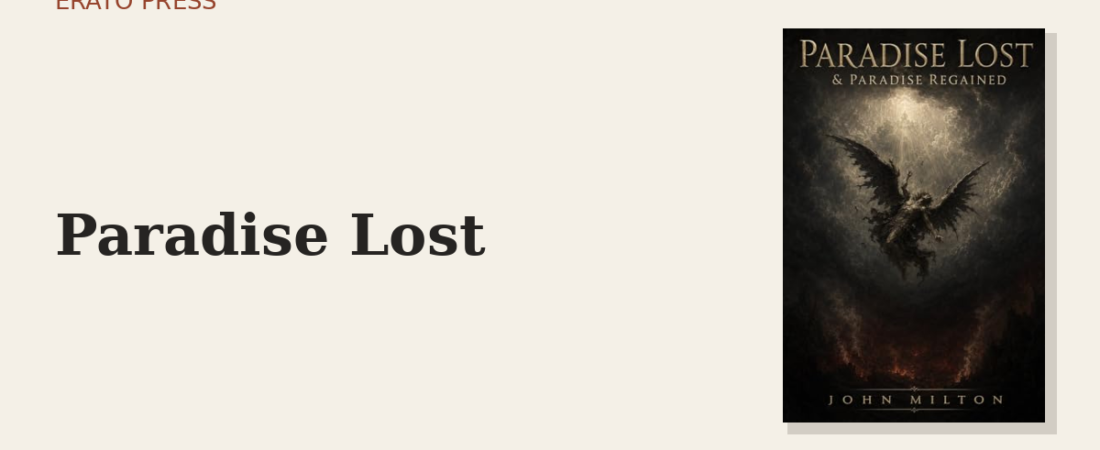

Milton set out, in Paradise Lost, to ‘justify the ways of God to men’ — and produced, against his own intentions, the most magnificent villain in English poetry. The problem has a name: Milton’s Satan is more interesting than his God, and readers have argued about it for three hundred years.
Satan gets the great speeches — the defiance, the wounded pride, the unforgettable resolve that it is ‘better to reign in Hell than serve in Heaven.’ He is courageous, eloquent, a leader who rallies the fallen; he sounds, at times, like a revolutionary hero. God, by contrast, explains and justifies, and the poetry cools whenever He speaks. The Romantics drew the obvious conclusion: Blake said Milton was ‘of the Devil’s party without knowing it.’
But the greatness of the poem may lie exactly in the trap. Milton, a master rhetorician, makes Satan seductive on purpose — and then shows us, slowly, the shrinking: the hero of Book One who has dwindled, by the end, into a hissing serpent. We are meant to fall for Satan and then feel ourselves falling, to catch our own hearts siding with pride. The poem does not fail to sell us on God; it succeeds in showing us why we prefer the rebel — and why that preference is the oldest sin.
See where it stands in the epic tradition.
Read Paradise Lost — the Erato Press edition →
Enjoyed this piece?
Get the next one — our essays on the classics and news of each new Erato Press edition — straight to your inbox.