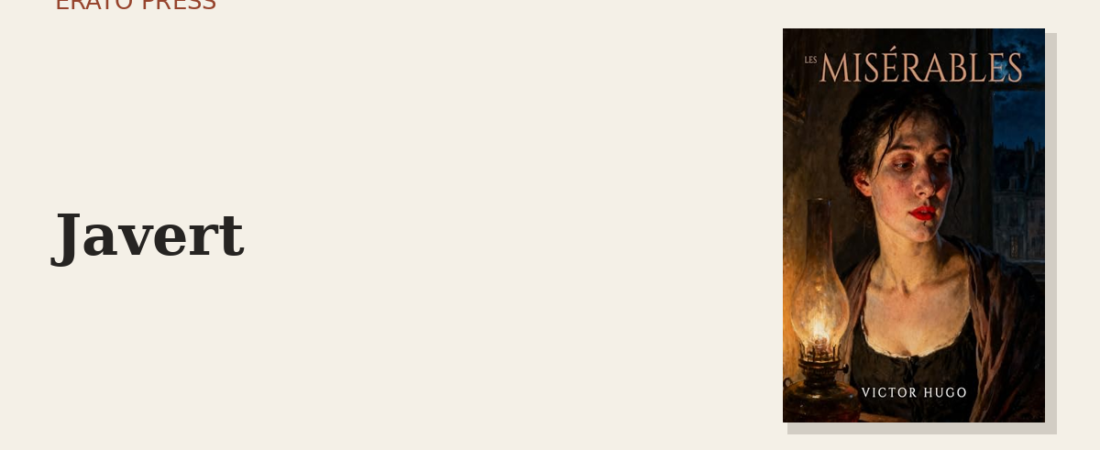

Les Misérables is the story of Jean Valjean, the convict who becomes a saint. But the character who haunts the book is his pursuer — Inspector Javert, the policeman who chases Valjean across two decades and a thousand pages for the crime of stealing a loaf of bread. And Javert is not a villain. That is what makes him tragic.
Javert believes, with his whole soul, in the Law. To him the world is simple: there are the lawful and the criminal, and a man who breaks the law once is a criminal forever. He is honest, incorruptible, tireless — everything we say we want in a policeman. And he is monstrous, because his faith in the rules has left no room for mercy, or for the possibility that a man can change.
Hugo springs the trap at the end: Valjean, given the chance to kill Javert, spares him instead. And that single act of mercy destroys the inspector — because a merciful criminal is a thing his entire universe cannot contain. Unable to arrest the man who saved him, unable to forgive him, Javert walks into the river. He is the good man broken by his own goodness, the rulebook that could not bend.
He is one of the great warnings in literature about justice without mercy.
Read Les Misérables — the Erato Press edition →
Enjoyed this piece?
Get the next one — our essays on the classics and news of each new Erato Press edition — straight to your inbox.