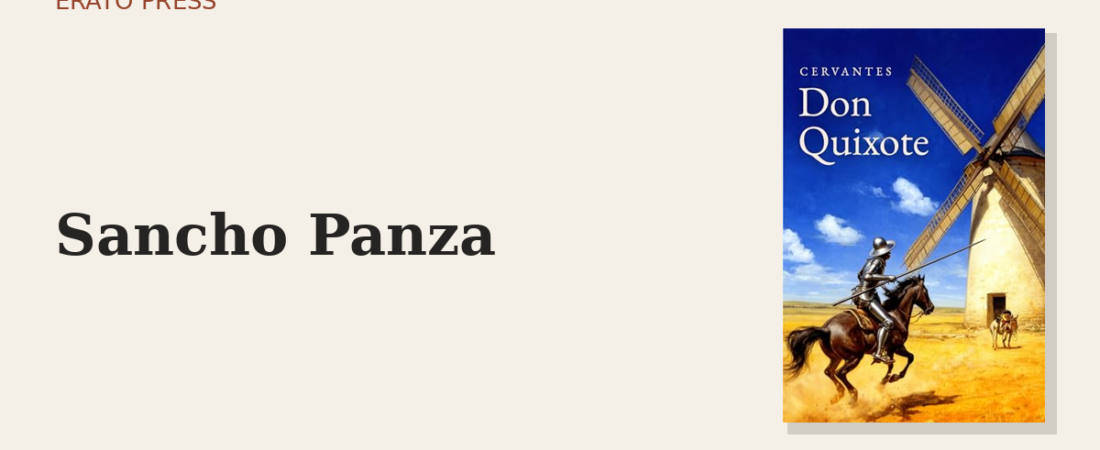

Don Quixote is remembered as the story of the mad knight who tilts at windmills. But the deepest pleasure of the first modern novel is not the master — it is the servant. Sancho Panza, the fat, illiterate, proverb-spouting peasant who follows a lunatic across Spain for the promise of an island to govern, may be the most lovable character in all of literature.
Cervantes’ masterstroke was to put the two of them side by side: the idealist who sees giants where there are windmills, and the realist who sees, always and only, the windmills. For eight hundred pages they argue, the head against the belly, the dream against the fact — and the miracle is that each slowly changes the other. Quixote grows gentler and wiser; Sancho, absurdly, begins to believe. By the end, when the knight recovers his sanity and dies, it is Sancho who begs him to stay mad, to ride out once more. The realist has been converted by the dream.
Every double act since — every mismatched pair of the practical and the impossible — descends from these two. Sancho is proof that the sidekick can be the soul of a book.
Read the novel that, four hundred years on, still invented the rest.
Read Don Quixote — the Erato Press edition →
Enjoyed this piece?
Get the next one — our essays on the classics and news of each new Erato Press edition — straight to your inbox.