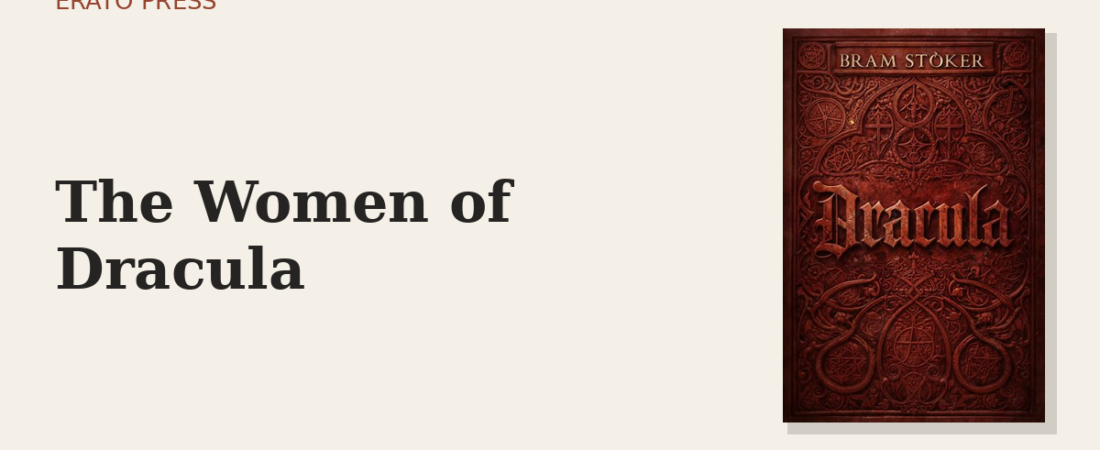

We have traced how Stoker invented the modern vampire. Look again, though, and Dracula reveals itself to be a book obsessed less with a Transylvanian count than with women — with what they might become if the corset of Victorian propriety ever slipped.
The novel gives us two: Lucy, who is punished, and Mina, who is spared. Lucy is desired by three men and jokes that she should be allowed to marry all of them; she is the one the vampire takes, and her transformation into a bloodthirsty, sexually voracious creature terrifies the men so completely that they drive a stake through her heart with something like relief. Mina, the dutiful wife, is nearly lost too — but she survives by remaining, to the end, useful and chaste.
Read this way, Dracula is a fever-dream about the ‘New Woman’ who alarmed the 1890s — independent, educated, sexually awake. The vampire is the return of everything Victorian England tried to repress, and it comes, tellingly, for the women first. The horror is desire itself, breaking loose.
That is why the book will not die: its monster is not in the castle but in the culture.
Read Dracula — the Erato Press edition →
Enjoyed this piece?
Get the next one — our essays on the classics and news of each new Erato Press edition — straight to your inbox.