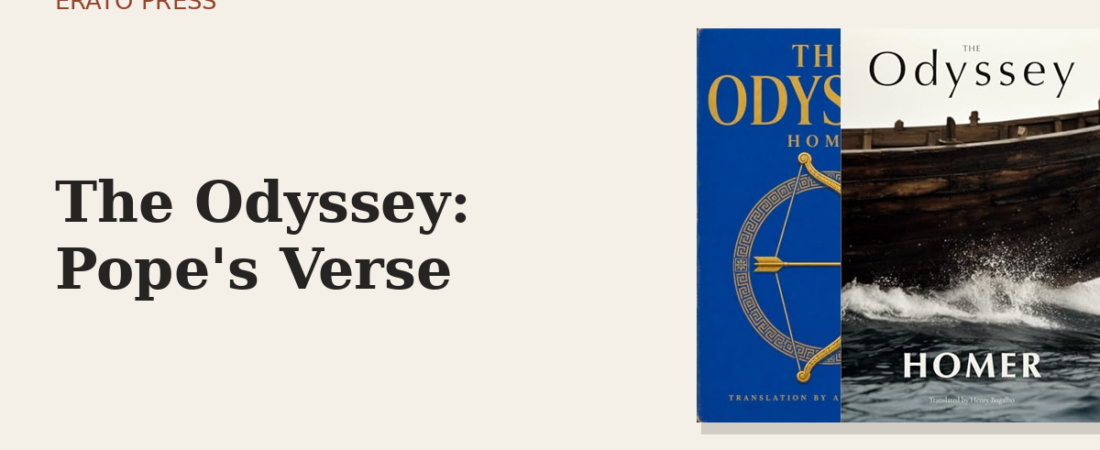

‘A pretty poem, Mr Pope,’ a scholar is said to have sneered, ‘but you must not call it Homer.’ The jibe has followed Alexander Pope’s Odyssey for three centuries — and it misses what makes his version immortal. Pope did not give England a literal Homer. He gave it a Homer that sang, in glittering heroic couplets, and for a hundred years his was the Odyssey the English-speaking world knew by heart.
The story of the translation is itself Homeric. The Odyssey was too vast to finish alone, so Pope quietly hired two collaborators to draft half the books, then polished everything into a seamless music so that no seam shows. The ‘secret collaborators’ became a minor scandal — but the poetry closed over the join like water.
To read Pope’s Odyssey now is to hear how a whole age heard Homer: orderly, brilliant, endlessly quotable, the wine-dark chaos of the Greek tamed into the poise of the eighteenth century. It is a masterpiece in its own right — a great English poem that happens to be a translation.
Set it beside our other Odysseys and our guide to which translation of Homer to read. Every translation is a fresh act of imagination, as we argued in our review of Nolan’s film.
Read The Odyssey in Pope’s verse translation →
Enjoyed this piece?
Get the next one — our essays on the classics and news of each new Erato Press edition — straight to your inbox.