
Of all Shakespeare’s tragedies, Othello is the most intimate and the most excruciating, because its catastrophe is so small. No kingdoms fall. A man is simply persuaded, by a few well-placed words, to disbelieve the one person who loves him — and destroys her, and himself, for nothing.
The engine of the tragedy is Iago, the greatest villain in the language and the most frightening, because his malice has no adequate motive. He offers several reasons for hating Othello and believes none of them; he simply enjoys the ruin of a better man. Coleridge called it ‘motiveless malignity.’ Iago is the whisper in every ear that says: are you sure? are you really sure?
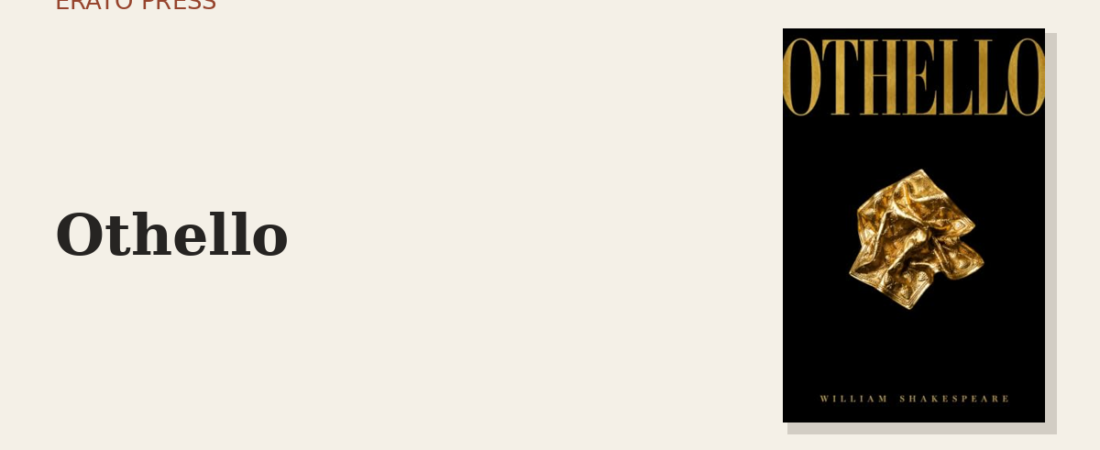
And Othello — noble, dignified, an outsider who has earned his place in Venice and never quite trusts it — is uniquely vulnerable to that whisper. The play is a study in how jealousy works: not as passion but as poison, drop by drop, turning love itself into the instrument of murder. The handkerchief, that trivial scrap of cloth, becomes proof of everything and nothing.
Read beside Macbeth, it shows Shakespeare anatomizing a second deadly emotion from the inside — where ambition destroyed one man, jealousy destroys another.
Read Othello — the Erato Press critical edition →
Enjoyed this piece?
Get the next one — our essays on the classics and news of each new Erato Press edition — straight to your inbox.