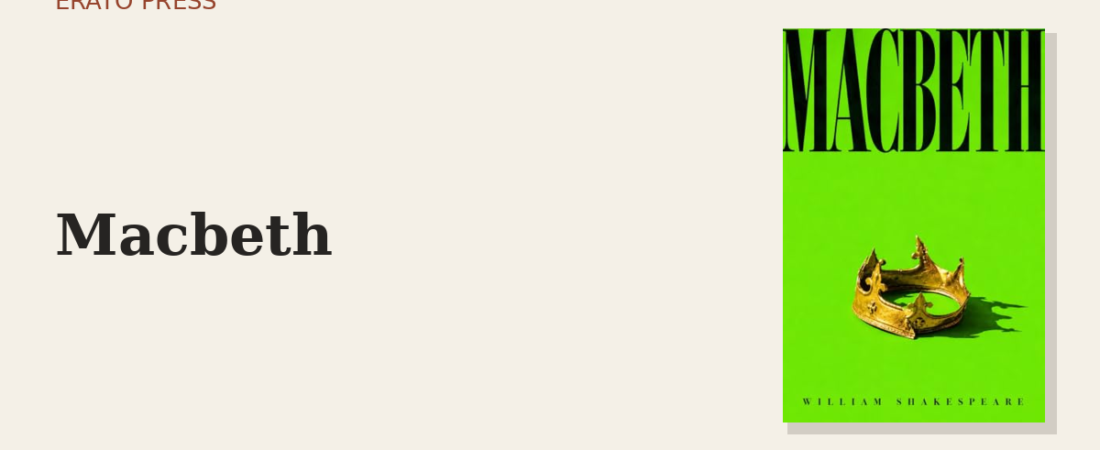

Macbeth is Shakespeare’s shortest tragedy and his fastest — a play that moves like the murder at its heart, quick and guilty and unable to stop. It asks a terrifying question: what happens in a soul that gets exactly what it wants by doing the one thing it knows it must not do?
What makes it unbearable is that Macbeth is not a villain when the play begins. He is a hero, a loyal soldier, a man with a conscience so vivid that he sees the dagger before he uses it and cannot wash the blood from his hands afterward. He knows, at every step, that he is damning himself — and does it anyway. Shakespeare gives us the rare thing: evil from the inside, narrated by a man who never loses the ability to see how far he has fallen.
And Lady Macbeth, who begins as the stronger of the two, unravels into the sleepwalker rubbing at a spot that will not come out. Between them they map the whole route of guilt: the ambition, the deed, the sleeplessness, the ruin.
It stands beside our editions of the other great tragedies — read it with Romeo and Juliet to see the same playwright at the two ends of his art: young love and old damnation.
Read Macbeth — the Erato Press critical edition →
Enjoyed this piece?
Get the next one — our essays on the classics and news of each new Erato Press edition — straight to your inbox.