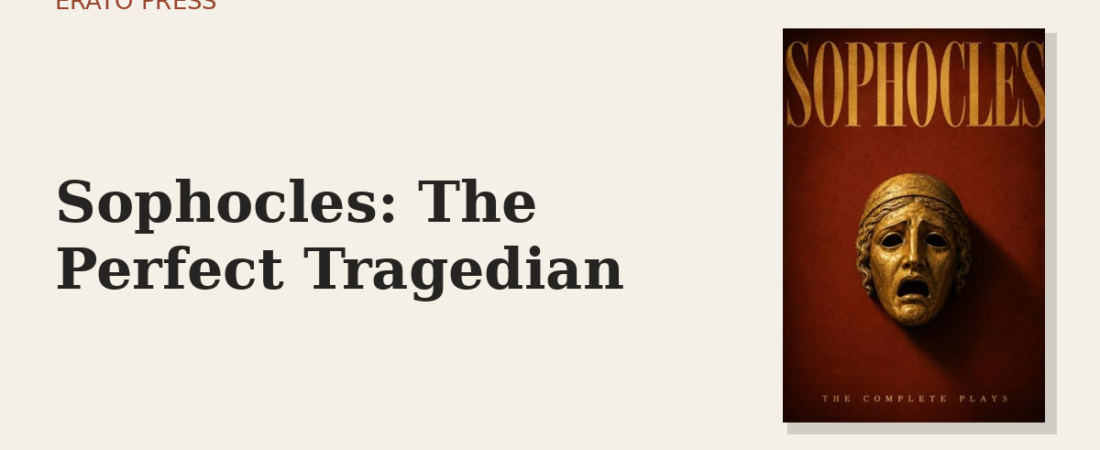

If Aeschylus invented tragedy, Sophocles perfected it. Aristotle built his entire theory of drama around one of his plays — Oedipus the King, the story of a man who runs from a prophecy straight into its arms, and destroys himself in the very act of seeking the truth. It remains the most flawless machine ever built out of words: every step Oedipus takes to save his city brings him closer to his own ruin.
Sophocles added the third actor and painted human beings with a depth no one had reached before. His Antigone is the first great conscientious objector — a young woman who defies the state to bury her brother, and pays with her life for the crime of being right. The clash between her and King Creon is the original of every drama about the individual against the law.
What makes him modern is his refusal of comfort. His people are not punished for wickedness; they are destroyed by their own greatness, their stubbornness, their virtue pushed too far. He looked at the worst that can happen to a human being and did not flinch, and did not moralize.
This edition gathers all seven surviving plays, including the complete Theban cycle. It is the summit of the form the Greek stage invented.
Read The Complete Plays of Sophocles →
Enjoyed this piece?
Get the next one — our essays on the classics and news of each new Erato Press edition — straight to your inbox.