
Before Aeschylus, there was one actor and a chorus. He added a second actor — and in that small technical change, drama was born. For the first time, two characters could stand on a stage and disagree. Conflict became visible. Everything we mean by theatre begins there.
He fought at Marathon, and he wrote as a man who had seen the gods’ justice work itself out in blood. His masterpiece, the Oresteia — the only complete trilogy to survive from ancient Greece — follows a single curse through three generations of one family, from murder to vengeance to the founding of the first court of law. It is the story of how humanity crawls out of the endless feud and invents justice itself.
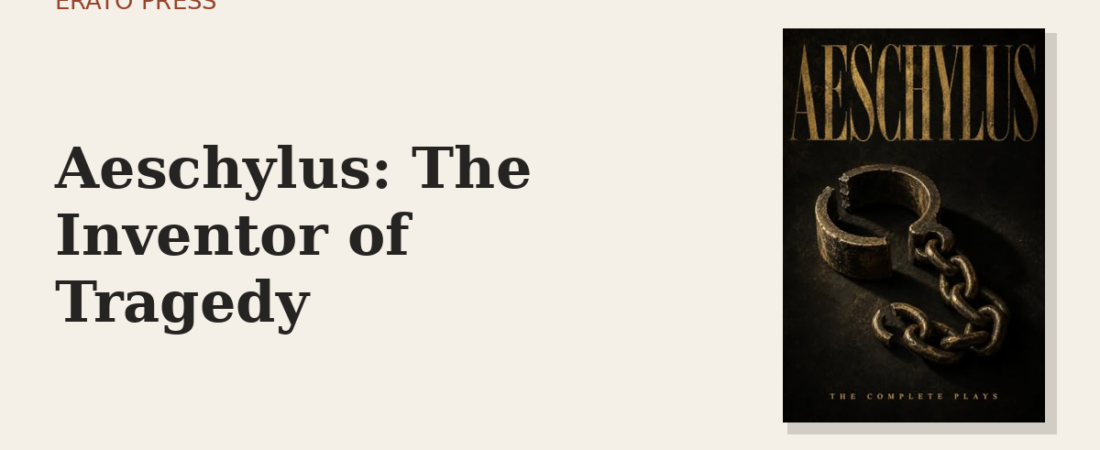
And in Prometheus Bound he gave us the first great rebel: the Titan chained to a rock for the crime of giving fire — knowledge — to mankind, defying the tyranny of Zeus. Every defiant hero since, from Milton’s Satan to Frankenstein’s creature, is his descendant.
This edition collects all seven surviving plays. Read with our editions of Sophocles and the tragic tradition, Aeschylus is the beginning — the moment the Western stage first drew breath.
Read The Complete Plays of Aeschylus →
Enjoyed this piece?
Get the next one — our essays on the classics and news of each new Erato Press edition — straight to your inbox.