
For fifteen centuries, if you wanted to know how a great man lived — and how you might become one — you read Plutarch. Shakespeare mined him for Julius Caesar and Antony and Cleopatra. The men who made the American and French revolutions quoted him from memory. Napoleon carried him into battle. No book of biography has ever cast a longer shadow.
Plutarch’s method was itself a stroke of genius. He paired a Greek with a Roman — Alexander with Caesar, Demosthenes with Cicero — and set their lives side by side, so that each man illuminated the other. He was not really writing history; he says so himself. He was writing character. ‘A slight thing like a phrase or a jest,’ he wrote, ‘often makes a greater revelation of character than battles where thousands die.’
That is why he still reads like the most modern of ancient writers. He understood that a life is not a list of victories but a pattern of choices, and that greatness and ruin are usually made of the same material. His Alexander is magnificent and monstrous; his Caesar is charming his way toward the knives.
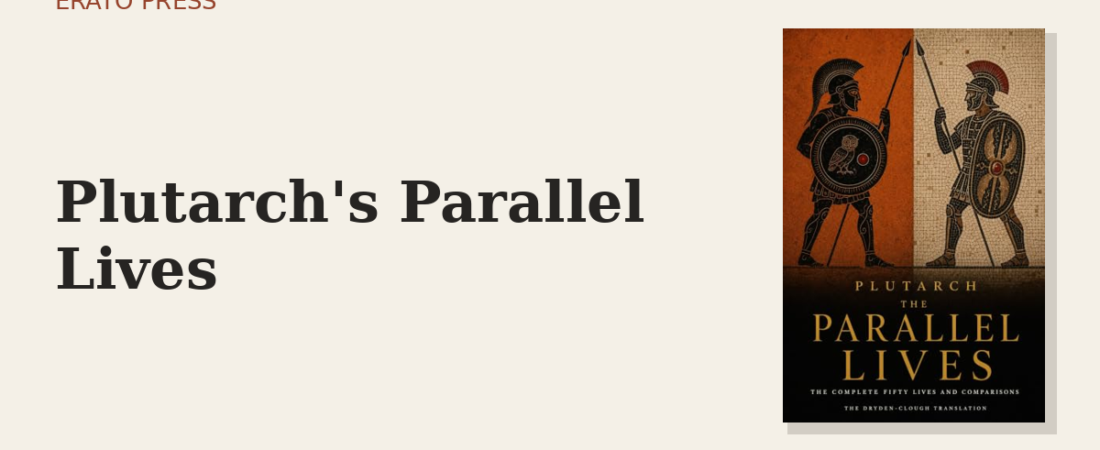
This Erato Press edition brings together all fifty Lives and the eighteen comparisons in one annotated volume — the complete gallery. Read next to Herodotus and the historians of Rome, it is the other half of the ancient project: not what happened, but who these people were.
Read The Parallel Lives — the Erato Press edition →
Enjoyed this piece?
Get the next one — our essays on the classics and news of each new Erato Press edition — straight to your inbox.