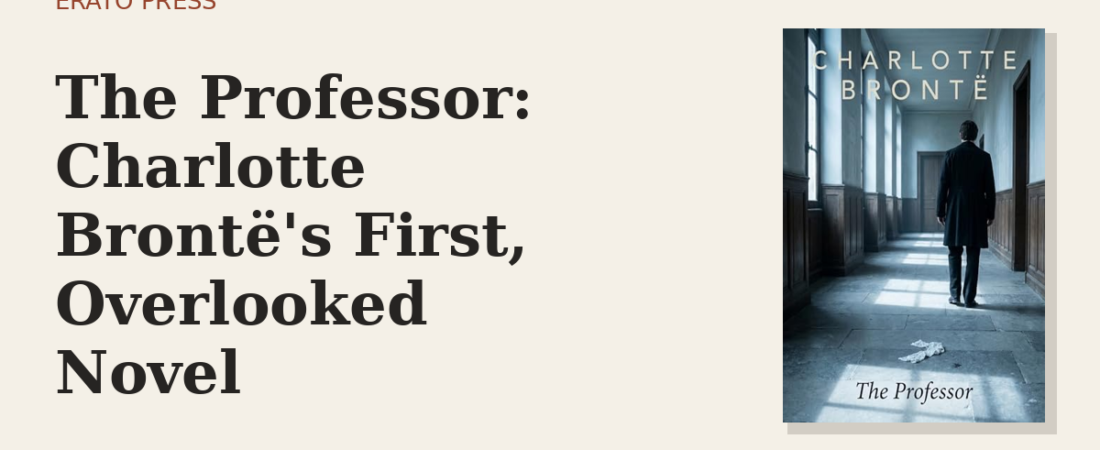
Before Jane Eyre made her famous, Charlotte Brontë wrote The Professor — and could not get it published. Rejected by house after house, it appeared only in 1857, after her death, as the posthumous first novel of a now-celebrated author. It is the quietest and least known of her books, a restrained, realistic story with none of the gothic fire of Jane Eyre, and for that reason it is often overlooked. But for anyone who loves Brontë, it is essential: the seed from which her genius grew, the first working-out of the themes — the lonely outsider, the making of a self through work, the love that must be earned between equals — that she would raise to greatness. It is a modest book by a writer discovering her power.
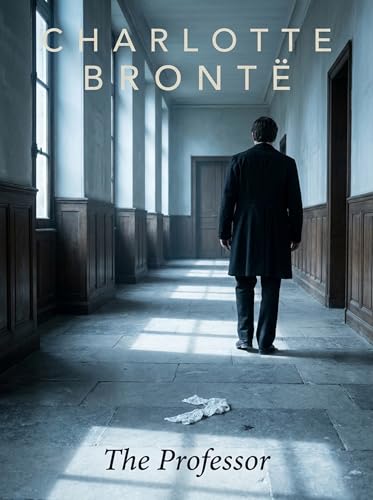
The Brussels novel
Like her masterpiece Villette, The Professor draws on the most formative and painful experience of Brontë’s life: her time as a student and teacher in Brussels, and her unrequited love for the married schoolmaster Constant Héger. Here she tells the story from a man’s point of view — William Crimsworth, an orphaned Englishman who makes his way as a teacher in a Belgian school — and traces his slow progress from poverty and isolation toward independence and love. Brontë would return to this same material, transformed and deepened, in Villette; reading The Professor first is like seeing the preliminary sketch for a great painting, the raw experience before it was fully alchemized into art. The restraint that made publishers reject it as insufficiently sensational is, to a later eye, part of its honesty.
Work, dignity, and the self-made soul
The novel’s real subject is one that runs through all of Brontë: the making of a self through labor and integrity. Crimsworth refuses the patronage of a cold, wealthy brother, choosing hard, independent work over comfortable dependence, and the book follows his patient construction of a life on his own terms. It is Brontë’s Protestant ethic of self-reliance in its clearest form — the conviction that dignity is earned, that love worth having is love between equals who have each made themselves, that no one should be owned or bought. These are the values that would give Jane Eyre its fire; here they burn more quietly, but they are unmistakably hers.
The apprentice masterpiece
The Professor is not the equal of Brontë’s great novels, and it does not pretend to be — it is an apprentice work, careful where the later books are passionate, its emotions banked rather than blazing. But it has real virtues: a clear-eyed realism, a quiet integrity, and moments of the psychological acuity that would flower into genius. For the reader who has fallen in love with the Brontës — whose paths our guide to where to start maps — it completes the picture, showing the great writer at her beginning, before the fame, before the fire, learning the craft she would master.
Why read it now
Because it is the origin of Charlotte Brontë — the first, restrained working of the material and the themes she would raise to greatness — and because there is a special pleasure in watching a great writer begin. Quiet, honest, and short, it rewards the reader who already loves her by revealing the roots of everything that came after.
Frequently asked questions
Why was The Professor rejected in Brontë’s lifetime?
Publishers found it too quiet and unsensational — it lacks the gothic drama that made Jane Eyre a hit. It was published only in 1857, after her death, as her posthumous first novel.
How does it relate to Villette?
Both draw on Brontë’s Brussels years and her love for a married teacher. The Professor is the earlier, simpler treatment; Villette is the profound, mature reworking of the same material — reading the first illuminates the second.
Should I read it before or after Jane Eyre?
After. Come to The Professor once you love Brontë, and read it as the fascinating apprentice work in which her great themes first appear.
Read the Erato Press edition →
and watch a great writer take her first step.
Enjoyed this piece?
Get the next one — our essays on the classics and news of each new Erato Press edition — straight to your inbox.